
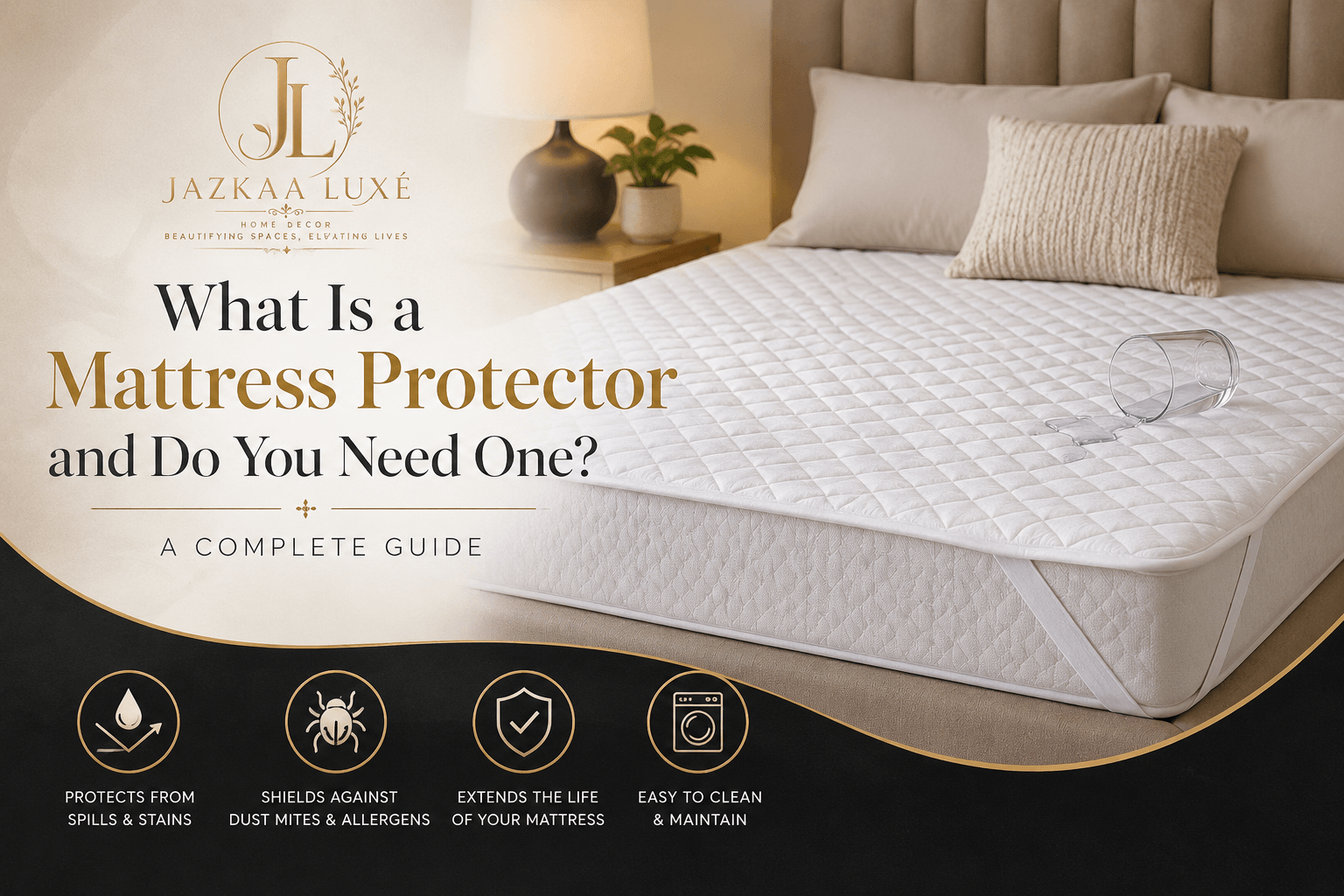
What Is a Mattress Protector and Do You Need One? A Complete Guide
A mattress is one of the most important investments in your bedroom. We spend several hours every night sleeping on it, yet many people forget that a mattress is exposed to sweat, dust, body oils, accidental spills, stains and everyday wear.
This is where a mattress protector can make a significant difference.
But what exactly is a mattress protector? Is it really necessary? Is a waterproof mattress protector better than a regular one? And how is a mattress protector different from a mattress pad or bedsheet?
In this detailed guide, we’ll answer all these questions and help you understand why mattress protection matters, the benefits of using a mattress protector, how to choose one and how to maintain it properly.
What Is a Mattress Protector?
A mattress protector is a removable layer of bedding that is placed directly over your mattress and underneath your fitted bedsheet. Its primary purpose is to create a protective barrier between your mattress and everyday moisture, dirt, stains, dust and other contaminants.
Unlike a regular bedsheet, which is primarily designed for comfort and bedroom aesthetics, a mattress protector is specifically designed to protect the mattress itself.
Many mattress protectors are designed like fitted sheets, with elastic edges that keep them securely positioned around the mattress. Some options also include waterproof or water-resistant layers to help prevent liquids from reaching the mattress.
A mattress protector can therefore be considered an important part of a complete bedding setup.
What Does a Mattress Protector Do?
The main purpose of a mattress protector is simple: protect your mattress from everyday damage and make mattress maintenance easier.
Depending on its construction and material, a good mattress protector can help protect against:
- Sweat and moisture
- Accidental liquid spills
- Food and beverage stains
- Dust and dirt
- Body oils
- Everyday debris
- Pet-related messes
- Allergens
- General surface wear
Because most mattresses are difficult to wash thoroughly, preventing contaminants from reaching the mattress in the first place can be much easier than trying to deep-clean the mattress later.
Why Do You Need a Mattress Protector?
You may be wondering, “Do I really need a mattress protector?”
Technically, you can sleep on a mattress without one. A mattress protector isn’t an absolute requirement for sleeping. However, it can be a practical and relatively simple way to protect an expensive mattress from everyday accidents and moisture.
Here are some of the biggest reasons to consider using one.
1. Protects Your Mattress From Spills
A glass of water, morning tea, coffee or juice can accidentally spill on your bed.
Without a protective layer, liquid can pass through the bedsheet and reach the mattress. Once absorbed, removing the moisture and stain from the mattress can be difficult.
A waterproof mattress protector provides an additional barrier that can help prevent liquid from reaching the mattress.
This can be especially useful in homes with children, pets or people who frequently eat or drink in bed.
2. Helps Protect Against Sweat and Moisture
Sweating during sleep is normal. Over time, moisture and body oils can accumulate on bedding and potentially reach the mattress.
A mattress protector creates an additional layer between your body and the mattress, helping reduce the amount of moisture that reaches the mattress.
This is particularly useful in warm and humid climates where perspiration can be a regular part of everyday sleep.
3. Helps Keep Your Mattress Cleaner
One of the biggest advantages of a mattress protector is convenience.
A mattress cannot simply be thrown into a washing machine like a bedsheet. Cleaning a mattress usually requires spot cleaning, vacuuming or professional cleaning depending on the material and manufacturer’s instructions.
A removable mattress protector, on the other hand, can generally be taken off and cleaned according to its care instructions.
This makes maintaining your overall bedroom hygiene much easier.
4. Helps Reduce Allergen Exposure
Mattresses can accumulate dust, dead skin cells and allergens over time.
For people who are sensitive to household allergens, keeping bedding clean can be particularly important. Some mattress protectors are designed to create a barrier that limits the amount of allergens reaching the mattress.
However, a mattress protector shouldn’t be considered a complete solution for allergies. Regular cleaning of bedsheets, pillow covers, blankets and the surrounding bedroom environment is also important.
5. Helps Prevent Mattress Stains
Mattress stains can be difficult to remove and may permanently affect the appearance of the mattress.
A protector acts as the first line of defence against accidental spills, sweat and other sources of staining.
This is one reason mattress protectors are particularly useful for:
- Children’s bedrooms
- Guest bedrooms
- Rental properties
- Hostel and PG rooms
- Homes with pets
- Newly purchased mattresses
6. Can Help Extend Mattress Life
A mattress is not an inexpensive purchase.
Protecting it from moisture, stains, dirt and everyday contamination can help keep the mattress in better condition over time.
A protector cannot stop normal mattress wear and tear or prevent every type of damage, but it can provide an additional protective layer that may contribute to better mattress maintenance.
Mattress Protector vs Bedsheet: What's the Difference?
A common mistake is assuming that a bedsheet provides the same protection as a mattress protector.
It doesn’t.
A bedsheet is primarily designed to provide a comfortable and attractive surface for sleeping. A mattress protector is placed underneath the bedsheet and is designed to protect the mattress.
Think of your bedding in layers:
Mattress → Mattress Protector → Fitted Bedsheet → Pillows & Bedding
For example, you can pair a protective mattress layer with an attractive cotton bedsheet set such as the Jazkaa Luxe King Size Cotton Bedsheet Set, which includes a king-size bedsheet and matching pillow covers.
This combination allows you to focus on both mattress protection and bedroom aesthetics.
Mattress Protector vs Mattress Pad
The terms mattress protector and mattress pad are often used interchangeably, but they serve different purposes.
Mattress Protector
The primary purpose is protection.
It is generally thinner and designed to protect the mattress from moisture, spills, stains, dirt and allergens.
Mattress Pad
The primary purpose is comfort.
A mattress pad can add an extra layer of cushioning and may slightly change the feel of your mattress.
In simple terms:
Mattress Protector = Protection
Mattress Pad = Added Comfort
If your main concern is protecting a new mattress from spills and stains, a mattress protector is the more relevant choice. If you’re primarily looking to make a firm mattress feel softer, a mattress pad or topper may be more suitable.
What Is a Waterproof Mattress Protector?
A waterproof mattress protector is designed with a liquid-resistant or waterproof barrier that helps stop spills and moisture from reaching the mattress.
This type of protector can be particularly useful for:
- Children
- Babies
- Pet owners
- People who sweat heavily at night
- Elderly family members
- Guest rooms
- Rental accommodation
- Everyday mattress protection
When buying a waterproof mattress protector, don’t focus only on the word “waterproof.” Also consider breathability, fabric quality, noise, fit, washing instructions and mattress depth compatibility.
A poorly designed protector may feel uncomfortable, make noise when you move or trap excessive heat.
How to Choose the Right Mattress Protector
Not all mattress protectors are the same. Before buying one, consider the following factors.
1. Choose the Correct Mattress Size
The protector should fit your mattress properly.
Common mattress sizes include:
- Single
- Double
- Queen
- King
- Super King
Measure your mattress before purchasing, particularly its depth or thickness.
An oversized protector may move around during sleep, while a protector that is too small may not fit properly.
2. Check the Material
The material can influence comfort, breathability and durability.
Look for a fabric that feels comfortable and is appropriate for your climate.
Cotton-based materials are popular because they can offer a soft and breathable feel, while some modern protectors incorporate synthetic or waterproof layers for additional protection.
3. Consider Breathability
If you live in a warm climate, breathability should be an important consideration.
A protector should ideally provide protection without making your sleeping surface unnecessarily hot.
4. Look for Easy Maintenance
Since a mattress protector is designed to protect your mattress from everyday messes, it should also be reasonably easy to clean.
Check the manufacturer’s washing and drying instructions before purchasing.
A washable protector can make regular bedding maintenance considerably more convenient.
5. Check the Fit
A fitted mattress protector with elastic edges can help keep the protector securely in place.
Make sure the product is compatible with your mattress depth.
6. Consider Waterproof Protection
If your priority is protection against spills, sweat or accidental moisture, consider a waterproof mattress protector.
If liquid protection isn’t your main concern, you may prefer a lightweight, breathable protector designed primarily for dust and general mattress protection.
Who Should Use a Mattress Protector?
Although almost anyone can benefit from mattress protection, certain households may find it particularly useful.
Families With Children
Children can accidentally spill drinks or experience nighttime accidents. A waterproof mattress protector can provide an extra layer of protection.
Pet Owners
Pets can bring dirt, hair and moisture into the bedroom. A washable mattress protector can help keep the mattress cleaner.
People Who Sweat During Sleep
If you frequently experience night sweating, a protective barrier can help reduce moisture reaching your mattress.
People With Allergies
Some mattress protectors can help create a barrier against allergens. However, regular washing and cleaning of bedding remains important.
People With New Mattresses
A new mattress is an investment. Protecting it from the beginning is generally easier than trying to restore it after years of stains and moisture exposure.
Guest Rooms
A mattress protector can be particularly practical in guest bedrooms where different people may use the mattress over time.
How to Use a Mattress Protector Correctly
Using a mattress protector is simple.
Step 1: Clean Your Mattress
Before installing a new protector, make sure the mattress is clean and completely dry.
Step 2: Place the Protector Over the Mattress
Position the mattress protector directly over the mattress.
Make sure the corners and elastic edges are properly aligned.
Step 3: Check the Fit
Smooth out wrinkles and make sure the protector sits securely without excessive looseness.
Step 4: Add Your Bedsheet
Place your fitted or flat bedsheet over the mattress protector.
For a stylish bedroom setup, you can choose a coordinated premium cotton bedsheet set from Jazkaa Luxe, which combines a large king-size bedsheet with matching pillow covers.
Step 5: Clean the Protector Regularly
Follow the manufacturer’s care instructions and wash the protector whenever it becomes dirty or after a significant spill.
Can You Use a Mattress Protector With a Bedsheet?
Yes.
In fact, this is the standard way to use a mattress protector.
The mattress protector goes underneath the bedsheet, creating a protective layer between your mattress and your everyday bedding.
A simple bedding arrangement is:
Mattress → Protector → Bedsheet → Pillow & Bedding
This setup combines mattress protection with the comfort and decorative appeal of quality bedding.
Do Mattress Protectors Make You Hot?
This depends largely on the material and construction.
Some waterproof or heavily layered protectors can feel warmer, while lightweight and breathable designs may have less impact on temperature.
If you’re a hot sleeper, look for terms such as:
- Breathable mattress protector
- Lightweight mattress protector
- Cotton mattress protector
- Cooling mattress protector
- Moisture-wicking mattress protector
Remember that the bedsheet you use also affects how your bed feels. Breathable cotton bedding, for example, can contribute to a comfortable sleeping environment.
Are Mattress Protectors Noisy?
Some waterproof mattress protectors may produce a slight crinkling sound, particularly if they use a thicker waterproof layer.
However, modern mattress protectors can be designed to minimise this issue.
When choosing one, look for a protector described as quiet, soft, breathable and lightweight, especially if you move frequently during sleep.
How Often Should You Wash a Mattress Protector?
The ideal washing frequency depends on how often the bed is used, the protector’s material and whether it has become dirty.
Always follow the manufacturer’s care instructions.
You should generally wash it sooner if:
- There has been a spill
- It has become visibly dirty
- A child has had an accident
- A pet has soiled the bed
- There is noticeable sweat or moisture buildup
Regularly washing removable bedding layers is an important part of maintaining a clean and comfortable bedroom.
Common Mistakes to Avoid When Buying a Mattress Protector
Buying the Wrong Size
A protector that doesn’t fit properly can move during sleep and may not provide complete coverage.
Choosing Protection Over Comfort
A waterproof protector is useful, but comfort and breathability shouldn’t be ignored.
Ignoring Mattress Depth
Two mattresses can have the same length and width but different thicknesses. Always check the depth compatibility.
Using a Protector Without Checking Care Instructions
Different materials require different washing and drying methods.
Confusing a Protector With a Topper
A protector is primarily designed to protect your mattress. A topper is designed to change the comfort or feel of the mattress.
Is a Mattress Protector Worth It?
For most households, a mattress protector is a practical bedding accessory.
You don’t necessarily need one to sleep comfortably, but it can provide an additional layer of protection against everyday spills, moisture, dirt and stains.
Considering that mattresses can be expensive and difficult to clean, protecting the mattress from the beginning can be a sensible approach to bedroom hygiene and mattress maintenance.
Final Verdict: Do You Need a Mattress Protector?
So, do you need a mattress protector?
The answer depends on your lifestyle, but for most people, yes—it is a worthwhile addition to their bedding setup.
If you have children, pets, allergies, a new mattress or simply want to keep your bedroom cleaner, a mattress protector can provide useful everyday protection.
The best setup is simple:
Quality Mattress + Mattress Protector + Comfortable Bedsheet + Clean Bedding = A Better-Maintained Bed
Once your mattress is protected, you can focus on creating a beautiful and comfortable bedroom with quality bedding. Explore Jazkaa Luxe premium bedsheets to add softness, comfort and style to your sleeping space.
Frequently Asked Questions About Mattress Protectors
A mattress protector is used to protect a mattress from spills, stains, sweat, moisture, dirt and everyday contaminants.
It isn't essential for sleeping, but it is a useful investment for protecting and maintaining your mattress.
Yes. A mattress protector normally sits directly over the mattress and underneath the bedsheet.
If your main concern is protection from spills, sweat and moisture, a waterproof mattress protector can be a good choice. For hot sleepers, look for breathable construction as well.
A mattress protector is primarily designed to protect the mattress, while a mattress pad is primarily designed to add cushioning and comfort.
It can help protect the mattress from moisture, stains and everyday contaminants, which may contribute to maintaining the mattress in better condition for longer. However, it cannot prevent all normal wear and tear.
Yes. A mattress protector is normally placed underneath the bedsheet, so you can use it with your preferred fitted or flat bedsheet.
Yes. Using a protector from the beginning can help protect a new mattress from accidental spills, stains and moisture.
Conclusion
A mattress protector may look like a small addition to your bedding collection, but it can play an important role in protecting one of the most valuable items in your bedroom.
From waterproof mattress protection and spill prevention to easier cleaning and better mattress maintenance, a good protector provides an extra layer of defence between everyday life and your mattress.
And once your mattress is protected, complete your bed with comfortable, stylish bedding from Jazkaa Luxe for a bedroom that combines practicality, comfort and elegance.