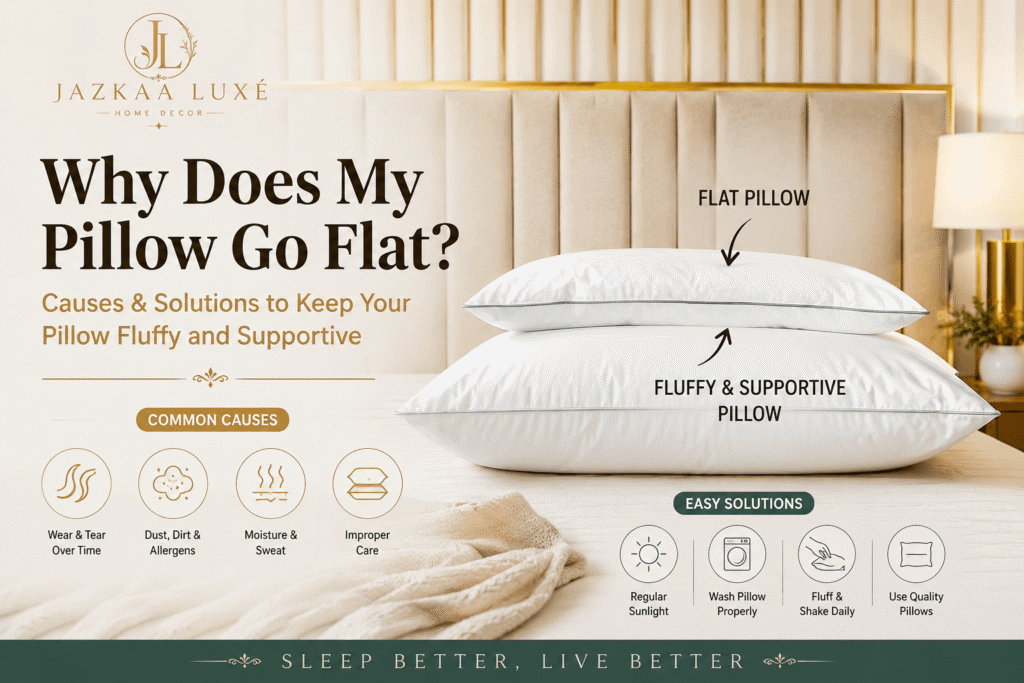

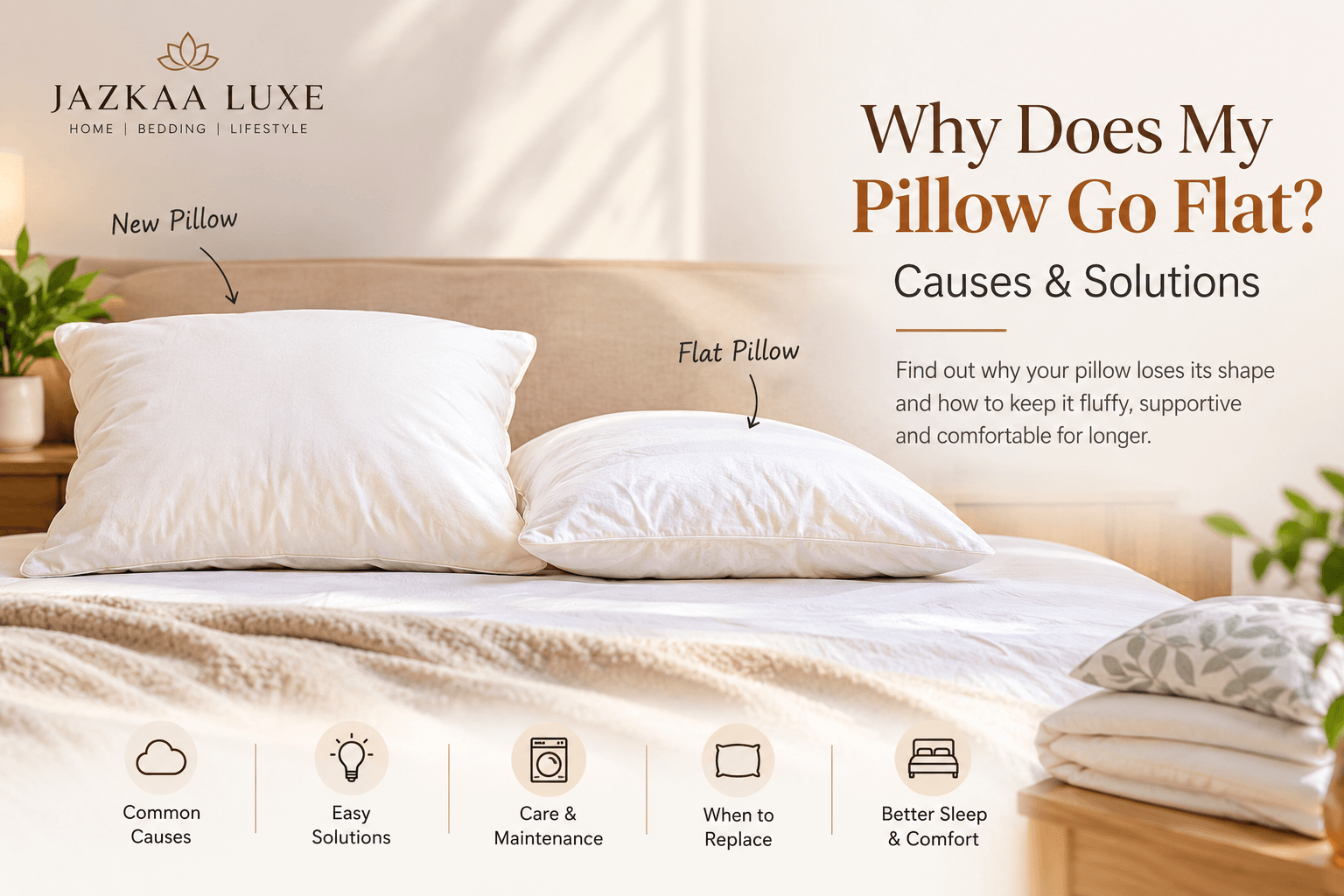
Why Does My Pillow Go Flat? Causes & Solutions
Why Does My Pillow Go Flat? Causes & Solutions Have you ever gone to bed with a comfortable, fluffy pillow only to wake up with a thin, uneven or completely flat pillow? If your pillow loses its shape, feels less supportive or develops permanent dents, you may be wondering: Why does my pillow go flat? A pillow can become flat for several reasons, including regular use, compression, moisture, incorrect washing, low-quality filling, poor maintenance and simply reaching the end of its usable life. Over time, the filling inside a pillow can lose its loft, making it feel thinner and less comfortable. A flat pillow is not just a cosmetic problem. If your pillow no longer provides adequate support, it may affect your sleeping comfort and contribute to morning neck or shoulder discomfort. In this detailed guide, we will explain why pillows go flat, how to prevent a pillow from flattening, how to make a flat pillow fluffy again, when to replace your pillow and how to choose a long-lasting pillow for everyday use. Why Does My Pillow Go Flat? The most common reason a pillow goes flat is repeated compression from everyday use. Every night, your head and body weight compress the pillow filling. With thousands of hours of repeated pressure, some types of filling gradually lose their original loft and ability to spring back. However, regular use is not the only reason. Common causes of a flat pillow include: Continuous nightly use Low-quality or insufficient filling Natural compression of pillow fibres Incorrect washing and drying Excess moisture and humidity Sleeping in the same position every night Poor pillow maintenance Age and normal wear and tear Heavy pressure or sitting on the pillow Choosing the wrong pillow type for your sleeping position Understanding the cause can help you decide whether the pillow can be restored or whether it is time to replace it. 1. Regular Use Can Flatten Your Pillow One of the biggest reasons pillows become flat is simply daily use. Your pillow supports your head for several hours every night. This repeated pressure compresses the filling and gradually reduces the pillow’s loft. A brand-new pillow may initially feel: Fluffy Full Supportive Soft Well-shaped After months or years of use, the same pillow may become: Thin Lumpy Uneven Compressed Less supportive This is normal to some extent. Even a good-quality pillow will eventually show signs of wear because bedding products are exposed to continuous pressure, body heat, moisture and movement. How to reduce compression You can help your pillow maintain its shape by: Fluffing it regularly Rotating it from time to time Avoiding sitting on it Keeping it dry Using a breathable pillow cover Following the manufacturer’s washing instructions 2. Low-Quality Pillow Filling Can Lose Loft Quickly Another important reason for a flat pillow is the quality and construction of the filling. Not all pillows are made with the same materials or the same amount of filling. A pillow with poor-quality or insufficient filling may flatten much faster than a well-constructed pillow. Common pillow fillings include: Polyester fibre Microfibre Memory foam Latex Feather and down Cotton Hollow fibre Other synthetic blends Each filling behaves differently. For example, some fibre-filled pillows may compress over time, while foam-based pillows generally behave differently because their structure provides support rather than relying entirely on loose fibres. When shopping for a pillow, don’t look only at how fluffy it feels when new. Consider the filling quality, construction, support level, size, firmness and intended use. 3. Washing Your Pillow Incorrectly Can Make It Flat Incorrect washing is one of the most overlooked causes of a flat or misshapen pillow. Some pillows can be machine washed, while others should only be spot cleaned or professionally cleaned. Washing a pillow incorrectly can damage the filling or cause it to clump together. For example, excessive water, aggressive washing, high heat or insufficient drying may affect the pillow’s structure. Before washing your pillow: Check the care label. Confirm whether the pillow is machine washable. Use the recommended washing cycle. Avoid harsh chemicals unless the manufacturer specifically recommends them. Follow the correct drying instructions. Make sure the pillow is completely dry before using it again. Never assume that because a pillow cover is machine washable, the pillow itself can also be washed in the same way. 4. Moisture and Humidity Can Affect Pillow Loft Your pillow absorbs moisture from your surroundings and from normal overnight use. Sweat, humidity and moisture can accumulate inside bedding over time, particularly in warm climates. Persistent moisture can make some types of filling feel compressed, heavy or less fluffy. This is particularly important for bedrooms in warm or humid environments. To keep your pillow fresher: Air it regularly. Keep your bedroom well ventilated. Use breathable pillow covers. Avoid storing pillows in damp areas. Make sure washed pillows are completely dry. Wash pillow covers regularly. For everyday bedding, breathable cotton textiles can be a practical choice. Jazkaa Luxe offers cotton bedding options designed around softness and breathability, including its Jazkaa 4146 King Size Cotton Bedsheet, which comes with matching pillow covers. 5. Your Pillow May Be Too Old Sometimes there is nothing wrong with your pillow—it has simply reached the end of its useful life. Pillows experience considerable wear because they are used for several hours almost every night. Over time, you may notice: Permanent dents Flattening Lumps Uneven filling Loss of support Discolouration Persistent odour Difficulty getting comfortable If fluffing and proper care no longer restore the pillow’s original shape, replacing it may be more practical than trying to repair it. The exact lifespan varies depending on the pillow material, quality, construction, care routine and frequency of use. 6. Sleeping in the Same Position Can Create Uneven Flattening Do you always sleep on exactly the same area of your pillow? If yes, repeated pressure in one spot can cause uneven compression. For example, if you sleep on your side and your head always rests in the same area, that section of the pillow may