
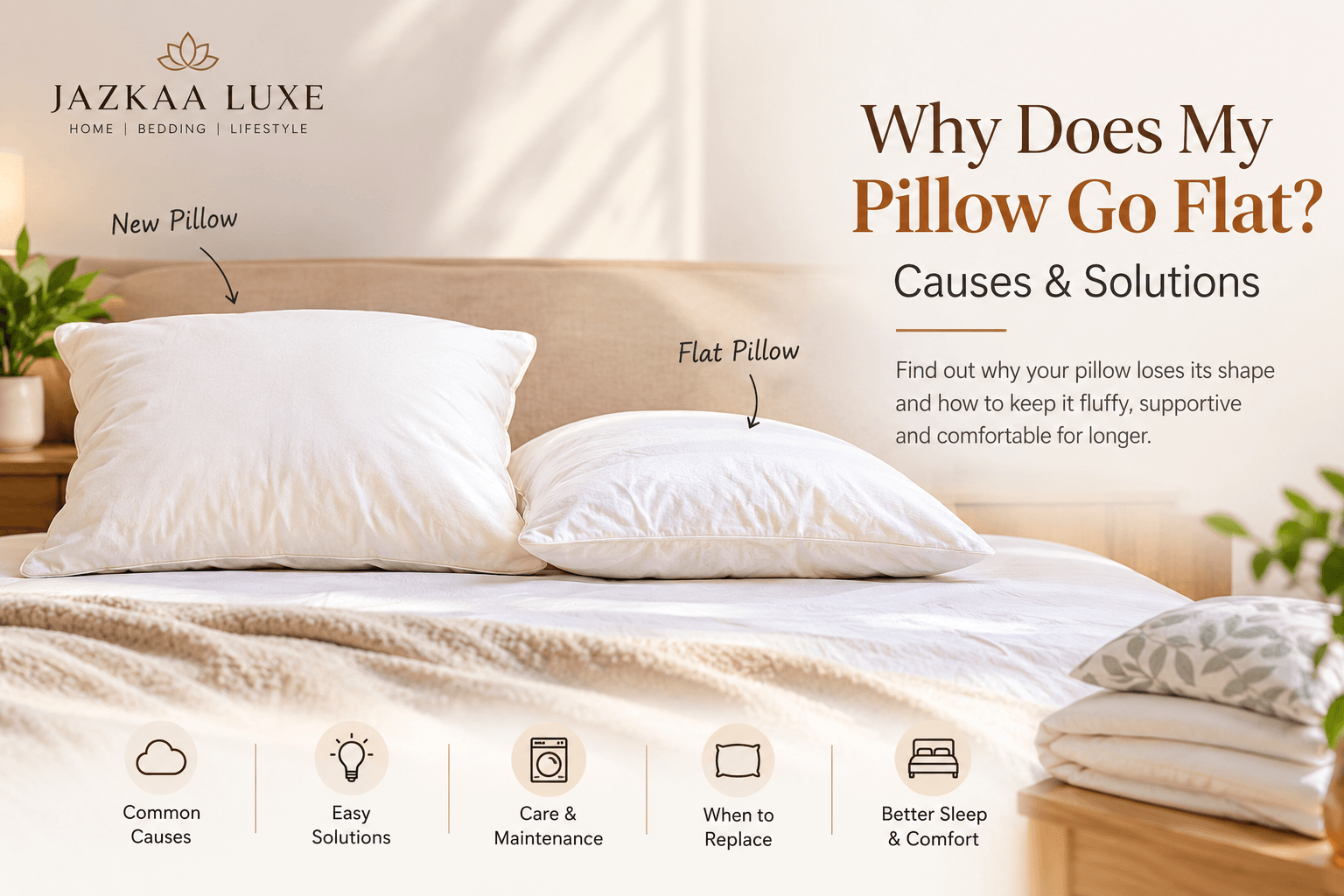
Why Does My Pillow Go Flat? Causes & Solutions
Have you ever gone to bed with a comfortable, fluffy pillow only to wake up with a thin, uneven or completely flat pillow? If your pillow loses its shape, feels less supportive or develops permanent dents, you may be wondering: Why does my pillow go flat?
A pillow can become flat for several reasons, including regular use, compression, moisture, incorrect washing, low-quality filling, poor maintenance and simply reaching the end of its usable life. Over time, the filling inside a pillow can lose its loft, making it feel thinner and less comfortable.
A flat pillow is not just a cosmetic problem. If your pillow no longer provides adequate support, it may affect your sleeping comfort and contribute to morning neck or shoulder discomfort.
In this detailed guide, we will explain why pillows go flat, how to prevent a pillow from flattening, how to make a flat pillow fluffy again, when to replace your pillow and how to choose a long-lasting pillow for everyday use.
Why Does My Pillow Go Flat?
The most common reason a pillow goes flat is repeated compression from everyday use.
Every night, your head and body weight compress the pillow filling. With thousands of hours of repeated pressure, some types of filling gradually lose their original loft and ability to spring back.
However, regular use is not the only reason.
Common causes of a flat pillow include:
- Continuous nightly use
- Low-quality or insufficient filling
- Natural compression of pillow fibres
- Incorrect washing and drying
- Excess moisture and humidity
- Sleeping in the same position every night
- Poor pillow maintenance
- Age and normal wear and tear
- Heavy pressure or sitting on the pillow
- Choosing the wrong pillow type for your sleeping position
Understanding the cause can help you decide whether the pillow can be restored or whether it is time to replace it.
1. Regular Use Can Flatten Your Pillow
One of the biggest reasons pillows become flat is simply daily use.
Your pillow supports your head for several hours every night. This repeated pressure compresses the filling and gradually reduces the pillow’s loft.
A brand-new pillow may initially feel:
- Fluffy
- Full
- Supportive
- Soft
- Well-shaped
After months or years of use, the same pillow may become:
- Thin
- Lumpy
- Uneven
- Compressed
- Less supportive
This is normal to some extent.
Even a good-quality pillow will eventually show signs of wear because bedding products are exposed to continuous pressure, body heat, moisture and movement.
How to reduce compression
You can help your pillow maintain its shape by:
- Fluffing it regularly
- Rotating it from time to time
- Avoiding sitting on it
- Keeping it dry
- Using a breathable pillow cover
- Following the manufacturer’s washing instructions
2. Low-Quality Pillow Filling Can Lose Loft Quickly
Another important reason for a flat pillow is the quality and construction of the filling.
Not all pillows are made with the same materials or the same amount of filling. A pillow with poor-quality or insufficient filling may flatten much faster than a well-constructed pillow.
Common pillow fillings include:
- Polyester fibre
- Microfibre
- Memory foam
- Latex
- Feather and down
- Cotton
- Hollow fibre
- Other synthetic blends
Each filling behaves differently.
For example, some fibre-filled pillows may compress over time, while foam-based pillows generally behave differently because their structure provides support rather than relying entirely on loose fibres.
When shopping for a pillow, don’t look only at how fluffy it feels when new. Consider the filling quality, construction, support level, size, firmness and intended use.
3. Washing Your Pillow Incorrectly Can Make It Flat
Incorrect washing is one of the most overlooked causes of a flat or misshapen pillow.
Some pillows can be machine washed, while others should only be spot cleaned or professionally cleaned. Washing a pillow incorrectly can damage the filling or cause it to clump together.
For example, excessive water, aggressive washing, high heat or insufficient drying may affect the pillow’s structure.
Before washing your pillow:
- Check the care label.
- Confirm whether the pillow is machine washable.
- Use the recommended washing cycle.
- Avoid harsh chemicals unless the manufacturer specifically recommends them.
- Follow the correct drying instructions.
- Make sure the pillow is completely dry before using it again.
Never assume that because a pillow cover is machine washable, the pillow itself can also be washed in the same way.
4. Moisture and Humidity Can Affect Pillow Loft
Your pillow absorbs moisture from your surroundings and from normal overnight use.
Sweat, humidity and moisture can accumulate inside bedding over time, particularly in warm climates.
Persistent moisture can make some types of filling feel compressed, heavy or less fluffy.
This is particularly important for bedrooms in warm or humid environments.
To keep your pillow fresher:
- Air it regularly.
- Keep your bedroom well ventilated.
- Use breathable pillow covers.
- Avoid storing pillows in damp areas.
- Make sure washed pillows are completely dry.
- Wash pillow covers regularly.
For everyday bedding, breathable cotton textiles can be a practical choice. Jazkaa Luxe offers cotton bedding options designed around softness and breathability, including its Jazkaa 4146 King Size Cotton Bedsheet, which comes with matching pillow covers.
5. Your Pillow May Be Too Old
Sometimes there is nothing wrong with your pillow—it has simply reached the end of its useful life.
Pillows experience considerable wear because they are used for several hours almost every night.
Over time, you may notice:
- Permanent dents
- Flattening
- Lumps
- Uneven filling
- Loss of support
- Discolouration
- Persistent odour
- Difficulty getting comfortable
If fluffing and proper care no longer restore the pillow’s original shape, replacing it may be more practical than trying to repair it.
The exact lifespan varies depending on the pillow material, quality, construction, care routine and frequency of use.
6. Sleeping in the Same Position Can Create Uneven Flattening
Do you always sleep on exactly the same area of your pillow?
If yes, repeated pressure in one spot can cause uneven compression.
For example, if you sleep on your side and your head always rests in the same area, that section of the pillow may gradually become flatter than the rest.
This can result in:
- A permanent indentation
- Uneven height
- Reduced support
- Lumpy filling
- An uncomfortable sleeping surface
Regularly fluffing and rotating your pillow can help distribute the filling more evenly.
7. Using the Wrong Pillow for Your Sleeping Position
Sometimes a pillow feels flat because it simply does not provide enough height or support for your sleeping position.
Your ideal pillow height can depend on factors such as:
- Sleeping position
- Shoulder width
- Mattress firmness
- Personal comfort preference
- Pillow construction
Side Sleepers
Side sleepers generally need sufficient pillow height to help maintain a comfortable head and neck position.
A very thin pillow may feel flat even when it has not physically lost much filling.
Back Sleepers
Back sleepers often prefer a pillow with moderate support that does not push the head too far forward.
Stomach Sleepers
Stomach sleepers often prefer a relatively low-profile pillow because excessive height may feel uncomfortable.
The important point is that “flat” does not always mean “damaged.” Your pillow may simply be too low for your preferred sleeping position.
8. How to Make a Flat Pillow Fluffy Again
If your pillow has only recently started looking flat, you may be able to restore some of its loft.
Try these methods.
Fluff the Pillow by Hand
Hold the pillow at both ends and gently squeeze and release it repeatedly.
Then turn it over and repeat the process.
This can help redistribute loose filling.
Shake the Pillow
Hold the pillow firmly and shake it from different directions.
This is particularly useful for fibre-filled pillows where the filling has become compressed in one area.
Rotate the Pillow
Turn the pillow regularly so the same section does not receive pressure every night.
Air the Pillow
Place the pillow in a clean, dry, well-ventilated area.
Fresh air can help reduce trapped moisture and refresh the pillow.
Avoid exposing materials to direct sunlight or heat unless the care instructions specifically permit it.
Follow the Manufacturer’s Cleaning Instructions
If the pillow is washable, clean it according to the manufacturer’s instructions.
Do not experiment with aggressive washing or high temperatures because some pillow materials can be damaged by improper care.
How to Keep Your Pillow From Going Flat
Preventing excessive compression is easier than trying to restore a badly flattened pillow.
Here are some simple pillow-care tips.
1. Fluff Your Pillow Regularly
Give your pillow a quick fluff every few days to redistribute the filling.
2. Rotate It
Turn the pillow periodically so the same area does not receive all the pressure.
3. Use a Pillow Cover
A good pillow cover protects the pillow from dust, sweat and everyday wear.
It can also make bedroom styling easier because pillow covers can be coordinated with your bedsheets.
Jazkaa Luxe’s bedding collections include bedsheet sets with matching pillow covers, making it easier to create a coordinated bedroom look. For example, the Jazkaa Luxe Bonanza 350 TC Pure Cotton Bedsheet Set includes two pillow covers and is designed for everyday bedding.
4. Keep Your Pillow Dry
Moisture can affect comfort and freshness.
Air your pillow regularly and ensure it is completely dry after cleaning.
5. Avoid Sitting on Your Pillow
Using a pillow as a seat or back cushion can apply excessive pressure and accelerate compression.
6. Follow Washing Instructions
Always check the care instructions before washing your pillow.
Does a Pillow Cover Make a Difference?
Yes, a pillow cover can help protect your pillow from everyday exposure to:
- Sweat
- Dust
- Skin oils
- Hair products
- Dirt
- General wear
A removable pillow cover is also easier to clean than the pillow itself.
When choosing pillow covers, consider:
- Fabric
- Size
- Breathability
- Comfort
- Stitching
- Closure
- Washability
- Design
Cotton is a popular choice for bedding because it is generally breathable, comfortable and easy to maintain.
If you are refreshing your bedroom, coordinating your pillow covers with your bedsheets can also create a more polished and stylish appearance.
How Often Should You Replace Your Pillow?
There is no single replacement schedule that applies to every pillow.
Instead, inspect your pillow regularly.
You may want to consider replacing it if:
- It remains flat after fluffing.
- It has permanent lumps.
- It has lost its original shape.
- It no longer feels comfortable.
- You wake up with discomfort that seems related to inadequate pillow support.
- The pillow has visible deterioration.
- It has developed a persistent unpleasant odour.
- The filling has become severely compressed.
The condition of the pillow is more useful than relying on a fixed replacement date.
7 Signs You Need a New Pillow
Not sure whether your pillow needs replacing?
Look for these warning signs.
1. It Stays Flat
If you fluff your pillow but it quickly returns to a flat shape, the filling may have lost its resilience.
2. It Has Permanent Lumps
Uneven or permanently clumped filling can make it difficult to maintain a comfortable sleeping position.
3. You Fold It to Make It Comfortable
If you constantly fold, roll or double your pillow to achieve sufficient height, it may no longer be providing the support you need.
4. It Has Lost Its Shape
A pillow should generally retain its intended form according to its design.
5. It Feels Thin
A significant reduction in loft may indicate that the filling has compressed.
6. It Looks Worn Out
Visible deterioration, stains, damaged fabric or weakened seams are signs that the pillow may need replacing.
7. You Are No Longer Comfortable
Even if the pillow looks acceptable, your comfort matters. If it no longer feels supportive or comfortable, consider whether a different pillow would be more suitable.
What Type of Pillow Is Best for Long-Term Comfort?
There is no single pillow that is perfect for everyone.
The best pillow depends on your sleeping position, preferred firmness, body proportions and comfort requirements.
When choosing a new pillow, consider:
Material
Look at whether the pillow uses memory foam, fibre, latex, feather, cotton or another filling.
Firmness
Choose according to your comfort preferences and sleeping position.
Loft
Loft refers broadly to the pillow’s height or thickness.
A low-loft pillow may work better for some stomach sleepers, while side sleepers may prefer greater height.
Shape
Standard rectangular pillows are suitable for many people, while contoured or ergonomic designs may appeal to people looking for a particular support profile.
Maintenance
Check whether the pillow is washable and whether the cover is removable.
Breathability
For warm climates, breathable materials and covers can help create a more comfortable sleeping environment.
Flat Pillow vs New Pillow: When Should You Replace It?
If your pillow is only slightly compressed, regular fluffing and proper care may restore some of its shape.
However, if the pillow remains flat, lumpy or uncomfortable despite maintenance, replacing it may be the more practical solution.
Think about your pillow like any other frequently used household textile: regular maintenance can extend its useful life, but no pillow lasts forever.
When buying a replacement, don’t choose based only on how fluffy the pillow looks in the product photograph.
Instead, check:
- Filling material
- Pillow dimensions
- Firmness
- Loft
- Cover material
- Care instructions
- Intended sleeping position
- Product construction
How Your Bedding Can Affect Sleep Comfort
Your pillow is only one part of your sleeping environment.
Your bedsheet, pillow cover, mattress, quilt and overall bedroom temperature can all contribute to how comfortable your bed feels.
For example, breathable cotton bedding can be useful for creating a comfortable sleeping environment. Jazkaa Luxe’s cotton bedsheet collections include products with breathable fabric and matching pillow covers, giving shoppers an easy way to coordinate bedroom essentials.
You can also explore the Jazkaa Luxe Bedsheets Collection when refreshing your bedroom bedding.
How to Create a More Comfortable Bedroom
Replacing a flat pillow is a good start, but you can take your bedroom comfort further.
Choose Comfortable Bedding
Select bedsheets based on fabric, breathability, size and personal preference.
Use Clean Pillow Covers
Wash pillow covers regularly to maintain a fresh sleeping surface.
Keep the Bedroom Ventilated
Good ventilation can help reduce excessive humidity and keep bedding fresher.
Avoid Overloading the Bed
Too many decorative cushions and accessories can make the sleeping area feel cluttered.
Choose Bedding According to the Season
Lightweight cotton bedding can be useful in warmer weather, while quilts and blankets can provide additional warmth during colder months.
Common Mistakes That Make Pillows Go Flat Faster
Avoid these common mistakes if you want your pillow to maintain its shape for longer.
Mistake 1: Never Fluffing the Pillow
Leaving compressed filling in exactly the same position every night can contribute to uneven flattening.
Mistake 2: Washing Without Checking the Label
Different pillow materials require different cleaning methods.
Mistake 3: Using Too Much Heat
High heat can damage certain pillow materials.
Mistake 4: Sleeping on a Wet or Damp Pillow
Always make sure your pillow is completely dry before using it.
Mistake 5: Sitting on the Pillow
Extra pressure can accelerate compression.
Mistake 6: Buying Only for Appearance
A very fluffy pillow is not automatically the best pillow. Consider construction, support, material and comfort.
Mistake 7: Ignoring the Pillow Cover
A clean, breathable pillow cover can help protect the pillow and contribute to overall bedding hygiene.
Frequently Asked Questions About Flat Pillows
A pillow can flatten quickly because of frequent use, low-quality filling, insufficient filling, repeated compression, moisture, improper washing or unsuitable construction for your sleeping style.
Try fluffing it by hand, shaking it from different directions, rotating it and airing it in a dry, well-ventilated area. If the pillow remains flat, the filling may have permanently lost its loft.
Repeated pressure in the same sleeping position can compress one area of the pillow more than the rest. Regularly rotating and fluffing the pillow can help distribute the filling.
Yes. Improper washing, excessive water, high heat or incorrect drying can affect some pillow fillings and cause them to clump or lose their shape. Always follow the manufacturer's care instructions.
Regularly fluff and rotate your pillow, use a suitable pillow cover, keep it dry, avoid sitting on it and follow the manufacturer's cleaning instructions.
Consider replacing your pillow when it remains flat after fluffing, develops permanent lumps, loses its shape, becomes uncomfortable or no longer provides the support you prefer.
A pillow that is too flat for your sleeping position may not provide the level of support you find comfortable. The ideal pillow height varies from person to person.
Yes. Pillow covers provide an additional protective layer against everyday exposure to dust, sweat, skin oils and general use. They can also be removed and washed more easily than many pillow inserts.
Cotton is a popular bedding fabric because it is generally breathable, comfortable and easy to maintain. The best choice still depends on personal preference, climate and the specific construction of the product.
Final Thoughts: Why Does My Pillow Go Flat?
So, why does your pillow go flat?
In most cases, the answer comes down to regular compression, ageing, filling quality, moisture, incorrect care or choosing a pillow that does not suit your sleeping position.
A slightly flattened pillow may be revived with regular fluffing, rotation and proper care. However, when a pillow remains permanently flat, lumpy or uncomfortable, it may be time to consider a replacement.
Remember that your pillow is only one part of a comfortable bedroom. Clean pillow covers, breathable bedsheets and suitable bedding can all contribute to a more comfortable and inviting sleeping environment.
If you’re refreshing your bedroom, explore Jazkaa Luxe’s Pillow Covers, browse the Bedsheets Collection, and consider coordinated bedding sets such as the Jazkaa Luxe Bonanza Pure Cotton Bedsheet Collection.
A comfortable pillow, clean bedding and thoughtfully chosen bedroom textiles can make your bed feel more comfortable while also giving your bedroom a fresh, coordinated look.
Quick Pillow-Care Checklist
- Fluff your pillow regularly.
- Rotate it to distribute pressure.
- Keep it dry and well ventilated.
- Use a washable pillow cover.
- Follow the manufacturer’s washing instructions.
- Avoid sitting on your pillow.
- Check regularly for permanent lumps or flattening.
- Replace severely worn or uncomfortable pillows.
- Choose pillow height according to your sleeping position.
- Pair comfortable pillows with breathable, quality bedding.
Jazkaa Luxe — bringing comfort, style and practical elegance to your bedroom.