

bedroom essentials

Explore bedroom essentials for creating a comfortable, stylish and inviting space. Discover bedsheets, bedding ideas, bedroom décor and practical home essentials from Jazkaa Luxe.


Best Bedding Ideas for a Minimalist Bedroom: Simple, Stylish & Comfortable
Home Decor

Best Bedding Ideas for a Minimalist Bedroom: Simple, Stylish & Comfortable

Best Bedding Ideas for a Minimalist Bedroom: Simple, Stylish & Comfortable A minimalist bedroom is all about creating a space that feels calm, uncluttered, comfortable, and visually balanced. While furniture, wall colours, lighting, and décor all contribute to minimalist interiors, your bedding plays one of the biggest roles in determining how your bedroom looks and feels. The right bedsheet, pillow covers, pillows, quilt, and colour palette can transform an ordinary bedroom into a peaceful modern retreat without adding unnecessary decoration. If you are looking for the best bedding ideas for a minimalist bedroom, the key is to focus on simplicity, neutral colours, quality fabrics, subtle patterns, and functional layering. At Jazkaa Luxe, you can find premium bedding options designed to combine everyday comfort with elegant bedroom styling. What Is Minimalist Bedding? Minimalist bedding refers to a simple and thoughtfully coordinated bedding arrangement that avoids excessive colours, patterns, textures, and decorative elements. Instead of filling the bed with numerous cushions and accessories, minimalist bedding focuses on a few carefully selected pieces. A minimalist bedding setup may include: A high-quality cotton bedsheet Two or four comfortable pillows Coordinated pillow covers A lightweight quilt or blanket One subtle accent cushion Neutral or earthy colours Simple patterns or solid colours The goal isn’t to make your bedroom look empty. Instead, the objective is to create a clean and sophisticated bedroom aesthetic where every element has a purpose. Why Choose Minimalist Bedding for Your Bedroom? Minimalist bedroom décor has become increasingly popular because it combines style and functionality. A simple bedding arrangement can make your bedroom appear more spacious while creating a relaxing atmosphere. 1. Creates a Calm Atmosphere Too many colours and patterns can make a bedroom feel visually busy. Neutral bedding colours such as white, beige, cream, grey, taupe, and soft earthy shades can create a peaceful environment. 2. Makes Small Bedrooms Look More Spacious If you have a compact bedroom, oversized patterns and excessive decorative elements can make the room appear crowded. Simple bedding with a limited colour palette can help create a more open and spacious appearance. 3. Makes Styling Easier Minimalist bedding is easy to coordinate with bedroom furniture, curtains, rugs, and wall colours. You don’t need to completely redesign your room every time you want to refresh its appearance. 4. Looks Timeless Trendy colours and complicated patterns can become outdated. Simple cotton bedsheets in elegant colours and subtle designs tend to remain stylish for years. 5. Focuses on Comfort Minimalism isn’t only about appearance. A well-designed minimalist bedroom should also be comfortable. Breathable cotton bedsheets, comfortable pillows, and lightweight quilts can help create a practical sleeping environment. 10 Best Bedding Ideas for a Minimalist Bedroom Here are some of the best ways to create a minimalist bedding setup without sacrificing comfort or style. 1. Choose Neutral-Coloured Bedsheets One of the easiest ways to achieve a minimalist bedroom aesthetic is to start with a neutral bedsheet. Popular minimalist bedding colours include: White Off-white Beige Cream Ivory Light grey Taupe Sand Soft brown Sage green Dusty blue Neutral colours work particularly well because they complement a wide range of bedroom interiors. If your walls are white or cream, beige or light grey bedding can add subtle contrast. Similarly, white bedding can brighten a room with darker furniture. For a comfortable everyday option, consider a premium cotton bedsheet from Jazkaa Luxe. The Bonanza Collection features 100% pure cotton, 350 thread count fabric and matching pillow covers. 2. Try a Monochromatic Bedding Colour Scheme A monochromatic bedroom uses different shades of the same colour. For example: White + Ivory + Cream or Beige + Taupe + Light Brown or Sage Green + Olive + Cream This approach creates visual harmony without making the room look boring. You can use a darker shade for the cushions or quilt while keeping the main bedsheet lighter. Minimalist Colour Formula Try following the 60-30-10 rule: 60% dominant colour 30% secondary colour 10% accent colour For example: 60% Cream + 30% Beige + 10% Brown This creates a sophisticated bedroom palette while maintaining a minimalist appearance. 3. Choose Cotton Bedsheets for Everyday Comfort The fabric of your bedding is just as important as its colour. For Indian bedrooms, cotton bedsheets are a practical choice because cotton is soft, breathable, and suitable for everyday use. A quality cotton bedsheet can provide: Softness Breathability Comfortable sleeping Easy maintenance Versatile styling Year-round usability Jazkaa Luxe offers several cotton bedding options, including large king-size bedsheets and sets with matching pillow covers. For example, the Jazkaa 4146 King Size Cotton Bedsheet measures 275 × 275 cm and comes with two matching pillow covers. Although its South Indian-inspired design is more decorative than a completely plain minimalist sheet, it can work beautifully in a minimalist room when the rest of the décor is kept simple. 4. Use Simple Patterns Instead of Busy Prints Minimalist doesn’t necessarily mean completely plain. You can introduce subtle patterns to add personality while keeping the bedroom visually clean. Good choices include: Thin stripes Small geometric patterns Subtle checks Minimal floral patterns Tone-on-tone designs Small abstract prints Simple line patterns Avoid combining multiple large floral, geometric, and colourful patterns in the same bedding arrangement. For example: Good minimalist combination: Neutral bedsheet + striped pillow covers + plain quilt Less minimalist combination: Floral bedsheet + geometric pillows + patterned quilt + colourful cushions The second combination may be beautiful, but it creates more visual activity. 5. Keep Pillow Styling Simple Pillows are an important part of minimalist bedding. Instead of covering the bed with numerous decorative cushions, focus on functionality and symmetry. A simple arrangement could include: King/Queen Bed: 2 sleeping pillows + 2 matching pillow covers You can then add one or two decorative cushions if you want additional layering. Jazkaa Luxe offers several pillow-cover options, including the Jazkaa Luxe 6880 Pure Cotton Pillow Covers, which feature a set of two cotton pillow covers designed for everyday bedding. For additional comfort, consider the Jazkaa Luxe Premium Sleeping Pillows, a
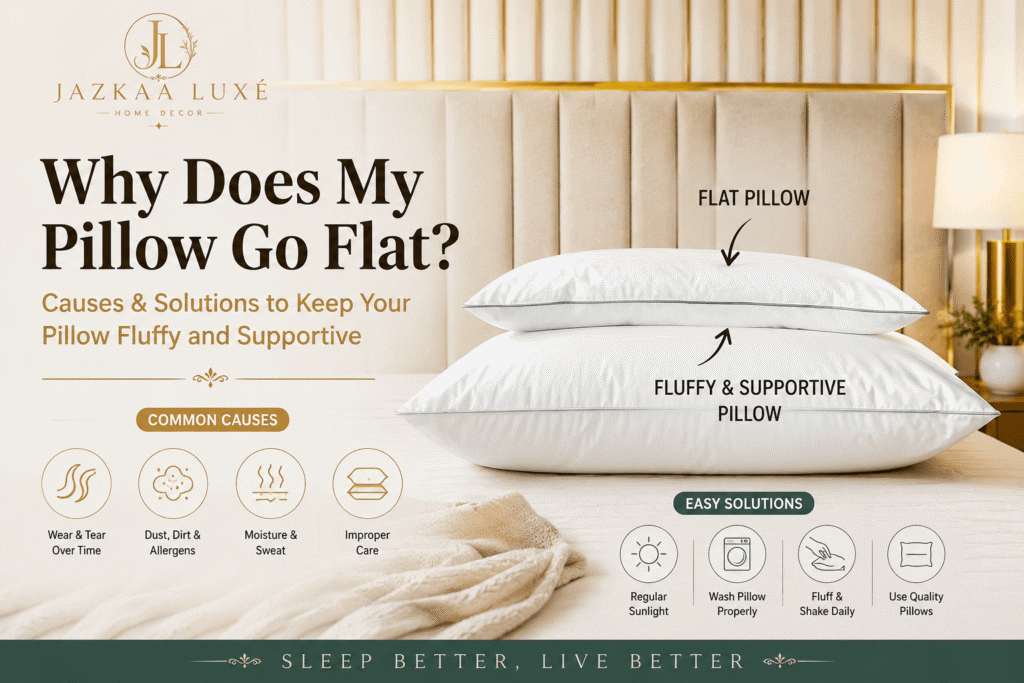

Why Does My Pillow Go Flat? Causes & Solutions to Keep Your Pillow Fluffy and Supportive
Home Decor

Why Does My Pillow Go Flat? Causes & Solutions to Keep Your Pillow Fluffy and Supportive

Why Does My Pillow Go Flat? Causes & Solutions to Keep Your Pillow Fluffy and Supportive Have you ever gone to bed with a soft, fluffy pillow only to wake up with it feeling completely flat? If so, you are not alone. Pillows naturally lose their loft and shape over time, but certain habits, materials, and maintenance mistakes can make a pillow go flat much faster. A flat pillow is more than just an uncomfortable bedding problem. When your pillow loses its height and support, it may no longer provide the cushioning your head and neck need during sleep. The right pillow should help maintain comfortable alignment while supporting your preferred sleeping position. In this detailed guide, we will explain why pillows go flat, what causes pillow flattening, how to make a flat pillow fluffy again, how to prevent your pillow from losing its shape, and when it is finally time to replace it. Whether you have a cotton-filled pillow, fibre pillow, memory foam pillow, or another type of bedding cushion, these practical tips can help you get more comfort and longevity from your pillow. Why Does My Pillow Go Flat? The most common reason a pillow goes flat is repeated compression. Every night, your head and neck place pressure on the pillow. Over hundreds of nights, the filling is repeatedly compressed. Some materials recover their original loft after pressure is removed, while others gradually lose their ability to bounce back. According to Sleep Foundation, factors such as repeated pressure, moisture, dirt and accumulated oils can contribute to a pillow losing its loft. Different filling materials also have different levels of durability and shape retention. The major causes include: Daily compression Low-quality or unsuitable filling Moisture and sweat Improper washing and drying Uneven distribution of filling Lack of regular fluffing Using the same side of the pillow every night Age and normal material deterioration Let’s look at each cause in detail. 1. Daily Pressure Can Flatten Your Pillow The biggest reason your pillow becomes flat is simple: you use it every night. Your head remains in roughly the same area for several hours, compressing the filling underneath it. Over time, repeated pressure can cause fibres, clusters or foam materials to lose some of their original loft. This is especially noticeable when a pillow develops a permanent depression in the centre. How to prevent it Try fluffing your pillow regularly and occasionally changing its position on the bed. If the filling allows it, gently shake, squeeze and redistribute the pillow to prevent one area from carrying all the pressure. 2. Your Pillow Filling May Be Losing Its Loft Not every pillow filling behaves in the same way. Some fillings are naturally more resilient, while others compress more quickly. Sleep Foundation notes that down, feather and down-alternative pillows generally require more frequent fluffing, while solid foam and latex options tend to retain their shape differently. If your pillow becomes flat soon after purchase, the problem may be related to: Low-quality filling Insufficient filling density Poor construction Filling that clumps easily A pillow that does not suit your sleeping position This is why choosing a quality pillow is important if you want long-lasting comfort and better shape retention. 3. Sweat and Moisture Can Make Pillows Flat Your pillow is exposed to body heat and moisture every night. Sweat, humidity, natural skin oils and other moisture can gradually affect the pillow filling. Moisture can encourage certain types of filling to clump or become less fluffy. Keeping your pillow in a damp environment can make the problem worse. What should you do? Allow your pillow to air out regularly. If the manufacturer’s care instructions permit it, clean and dry the pillow properly. Important: Always follow the manufacturer’s washing instructions. Not every pillow should be machine washed or tumble dried. For example, memory foam and latex pillows generally require different care from fibre-filled pillows. 4. Washing Your Pillow Incorrectly Can Cause Flattening Cleaning your pillow is important, but improper washing can damage the filling. Using excessive detergent, washing at the wrong temperature, overloading the washing machine or failing to dry the pillow completely can affect its texture and shape. Some pillows can be machine washed, while others require spot cleaning or specific care. Before washing, always check: The care label Recommended water temperature Suitable detergent Whether machine washing is allowed Whether tumble drying is permitted Recommended drying method A pillow that remains damp inside can develop unpleasant odours and may lose its freshness. 5. Your Pillow May Need Regular Fluffing Sometimes a pillow isn’t permanently flat—it simply needs to be fluffed. Fluffing helps redistribute the filling and restore some of the air and volume between the fibres. Sleep Foundation recommends manual fluffing for several types of fill, particularly when the filling has become compressed or uneven. How to fluff a pillow by hand Try this simple method: Step 1: Hold the pillow from opposite sides. Step 2: Gently squeeze and release it several times. Step 3: Shake the pillow to redistribute the filling. Step 4: Massage any visible lumps or compressed areas. Step 5: Leave the pillow in a well-ventilated area for some time. Avoid aggressively beating or twisting the pillow, especially if the filling or construction is delicate. 6. Sleeping on the Same Side Every Night If you always sleep on the same side of the pillow, the filling underneath your head receives more pressure than the rest. Over time, this can create: A permanent dent Uneven filling Lumps Reduced loft Uneven neck support Regularly fluffing and repositioning your pillow can help distribute the filling more evenly. How to Make a Flat Pillow Fluffy Again Before replacing your pillow, try a few simple methods. Method 1: Manual Fluffing Hold the pillow by both ends and gently pull it outward. Shake it from side to side and massage compressed sections. This is particularly useful when the filling has simply shifted rather than permanently deteriorated. Method 2: Air It Out Place the pillow in a clean,

Best Cervical Pillow for Neck Pain: Complete Guide to Choosing the Right Pillow for Better Sleep
Home Decor

Best Cervical Pillow for Neck Pain: Complete Guide to Choosing the Right Pillow for Better Sleep

Best Cervical Pillow for Neck Pain: Complete Guide to Choosing the Right Pillow for Better Sleep Waking up with neck pain, shoulder stiffness, headaches, or upper-back discomfort can make your entire day uncomfortable. While several factors can contribute to neck pain, your pillow is one of the most important things to examine if the discomfort regularly appears after sleeping. A cervical pillow for neck pain is designed to provide better support to the head and neck while helping maintain a more natural spinal position during sleep. But with so many options available—including memory foam pillows, orthopaedic pillows, contour pillows, ergonomic pillows, and traditional pillows—it can be difficult to decide which one is right for you. The best cervical pillow is not necessarily the firmest or most expensive pillow. The ideal choice depends on your sleeping position, shoulder width, mattress firmness, preferred pillow height, material, and personal comfort. In this detailed guide, we will explain how to choose the best cervical pillow for neck pain, which pillow is suitable for side and back sleepers, what pillow height you should consider, and how the right pillow can improve your sleeping posture. What Is a Cervical Pillow? A cervical pillow is a specially designed pillow that supports the natural curve of the cervical spine—the portion of the spine located in your neck. Unlike a conventional pillow, an ergonomic cervical pillow may have a contoured shape, with a higher section designed to support the neck and a lower section where the head rests. The primary objective is to help keep the head, neck, and spine in a neutral position while sleeping. A properly selected pillow should fill the space between your head and mattress without pushing your head excessively forward, backward, or sideways. Pillow support and loft are particularly important because an unsuitable pillow can contribute to uncomfortable neck positioning. Why Is Cervical Support Important? Your neck remains in one position for several hours while you sleep. If your pillow is too high, too low, too soft, or too firm for your sleeping position, your neck may remain at an awkward angle for a prolonged period. This may contribute to: Morning neck stiffness Shoulder discomfort Upper-back tension Headaches Poor sleeping posture Difficulty finding a comfortable sleeping position Feeling sore after waking up A supportive pillow can help maintain better alignment between the head, neck, and spine. How Does a Cervical Pillow Help With Neck Pain? The biggest advantage of a cervical pillow is its focus on support and alignment. When you lie down, your head creates a gap between your neck and the mattress. The pillow should fill this gap appropriately while supporting the natural curve of the neck. A cervical pillow may help by: 1. Supporting the Natural Neck Curve A contoured pillow can provide additional support underneath the neck rather than allowing the neck to remain unsupported. 2. Promoting Better Spinal Alignment The head should ideally remain aligned with the rest of the spine rather than tilting excessively to one side or being pushed too far forward. 3. Reducing Pressure Points Materials such as memory foam can conform to the shape of the head and neck, providing more evenly distributed support. 4. Improving Sleeping Comfort A pillow that matches your sleeping position can make it easier to maintain a comfortable position throughout the night. 5. Supporting Better Sleep Posture Good sleep posture is not simply about lying straight. It is about keeping the neck and spine in a relatively neutral position that does not create unnecessary strain. What Is the Best Cervical Pillow for Neck Pain? There is no single pillow that is perfect for everyone. The best cervical pillow for neck pain should be selected according to your sleeping position and individual requirements. For many people, a supportive ergonomic or contoured pillow can be a good option because its shape is specifically designed to provide neck support. Memory foam is another popular material because it can conform closely to the head and neck. However, some memory foam pillows can retain more heat than other materials, so hot sleepers should also consider breathability. When selecting a pillow, focus on: Pillow height or loft Firmness Shape Material Neck support Sleeping position Mattress firmness Breathability Washable/removable cover Overall comfort Best Cervical Pillow According to Sleeping Position Your sleeping position is one of the most important factors when choosing an orthopedic pillow for neck pain. 1. Best Cervical Pillow for Side Sleepers Side sleepers usually require more pillow height because the distance between the mattress and head is greater due to the shoulders. A pillow that is too thin can allow the head to tilt downward, while an excessively thick pillow can push the head upward. A medium-to-high loft cervical pillow may therefore be more appropriate for many side sleepers. Side sleepers should look for: Good shoulder-to-head support Medium or firm support Adequate pillow height Contoured neck support Good shape retention Sleep Foundation notes that side sleepers generally need a thicker pillow to fill the space between the head and mattress and maintain alignment. Tip for Side Sleepers Lie on your side and check whether your head remains approximately level with your spine. If your head noticeably drops toward the mattress or is pushed upward, your pillow height may not be appropriate. 2. Best Cervical Pillow for Back Sleepers Back sleepers generally need less pillow height than side sleepers. A medium-loft cervical pillow can provide support while preventing the head from being pushed too far forward. A contoured orthopedic pillow can be particularly useful because its raised neck section can support the cervical curve while allowing the head to rest on a lower portion. Back sleepers should look for: Medium pillow height Moderate firmness Contoured neck support Good head support Pressure-relieving material Proper alignment is particularly important because a pillow that is too high can push the head forward and create an uncomfortable neck angle. 3. Best Pillow for Stomach Sleepers Stomach sleeping can be more challenging for people experiencing neck discomfort because the

0

Your Cart Is Empty

✖

No products in the cart.

Scroll to Top