
cervical pillow for neck pain

Discover helpful information about cervical pillows for neck pain, including their benefits, neck-support features, sleeping positions, and tips for choosing the right pillow. Explore expert-informed guidance on cervical pillows, orthopedic pillows, and comfortable sleep support for better sleeping posture.

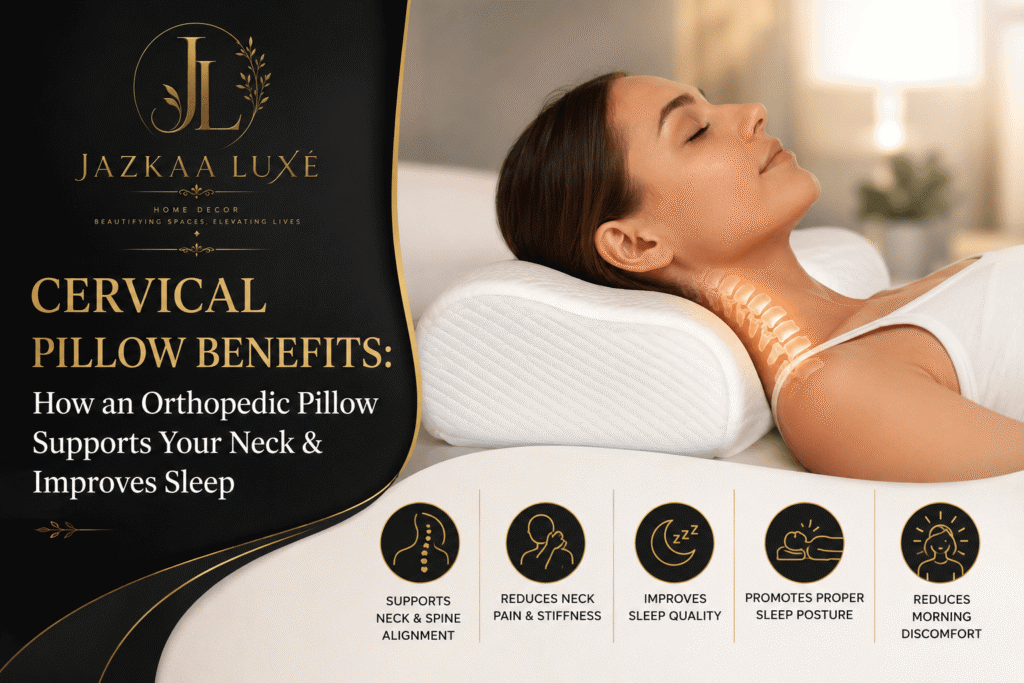
Cervical Pillow Benefits: How an Orthopedic Pillow Supports Your Neck & Improves Sleep
Home Decor

Cervical Pillow Benefits: How an Orthopedic Pillow Supports Your Neck & Improves Sleep

Cervical Pillow Benefits: How an Orthopedic Pillow Supports Your Neck & Improves Sleep Waking up with a stiff neck, shoulder discomfort, or a feeling that you did not sleep properly can sometimes be related to your sleeping posture and pillow support. The pillow you use every night plays an important role in keeping your head and neck comfortable while you sleep. A cervical pillow, also known as an orthopedic pillow or neck support pillow, is designed to provide targeted support to the neck while helping maintain a more natural alignment of the head, neck, and spine. Unlike a traditional flat pillow, many cervical pillows feature a contoured shape that supports the neck and cradles the head. Choosing the right pillow can make your bedtime routine more comfortable and may help promote better sleeping posture. However, the ideal pillow depends on factors such as your sleeping position, mattress firmness, pillow height, body shape, and personal comfort. In this guide, let’s explore the benefits of cervical pillows, how cervical pillows work, who should use them, how to choose the right neck support pillow, and how to use one correctly. What Is a Cervical Pillow? A cervical pillow is an ergonomically designed pillow intended to support the natural curve of the cervical region of the spine. Unlike conventional pillows that may have a relatively uniform height, cervical pillows often have a contoured structure. The raised portion can support the neck while the lower section provides space for the head. Many cervical pillows are made using materials such as memory foam or latex because these materials can conform to the shape of the head and neck while providing support. The primary purpose of a cervical pillow is not simply to make your bed more comfortable. It is to help create a sleeping position where your head, neck, and spine remain properly supported. 7 Important Cervical Pillow Benefits A properly selected cervical pillow can offer several potential benefits, particularly for people who want better neck support and improved sleeping posture. 1. Supports Natural Neck Alignment One of the biggest cervical pillow benefits is improved support for the neck. When you sleep, your head should ideally remain in a relatively neutral position rather than being pushed too far forward, backward, or sideways. A pillow with an appropriate height and contour can help fill the space between your head, neck, and mattress. Maintaining better alignment may help reduce unnecessary strain caused by an unsupported sleeping position. Sleep Foundation notes that good sleep posture involves maintaining the natural curvature of the spine with appropriate support from the mattress and pillow. 2. May Help Reduce Morning Neck Stiffness Have you ever gone to bed feeling fine but woken up with a stiff or uncomfortable neck? Your pillow could be one factor worth evaluating. A pillow that is excessively high, too low, or unable to provide adequate support may interfere with comfortable sleeping posture. A well-designed cervical pillow can provide more targeted support around the neck. This does not mean a cervical pillow will cure neck pain or treat an underlying medical condition. However, choosing an appropriate pillow and sleeping position may help create a more supportive sleep environment. For people experiencing persistent or severe neck pain, professional medical advice is recommended. 3. Helps Promote Better Sleeping Posture Your sleeping posture can influence how your head, neck, shoulders, and spine are positioned throughout the night. A supportive pillow should complement your sleeping position rather than forcing your head into an unnatural angle. For example: Back sleepers generally benefit from moderate pillow height and adequate neck support. Side sleepers usually require a higher pillow to fill the space between the shoulder and head. Stomach sleepers often need a much thinner pillow because excessive height can place the neck at an awkward angle. This is why there is no single “best cervical pillow” for everyone. Your sleeping position should be one of the first factors you consider when selecting a pillow. 4. Provides Targeted Neck Support Traditional pillows are primarily designed to provide general head support. A cervical pillow, on the other hand, is specifically shaped to provide additional support around the cervical region. Contour designs can cradle the head while providing a raised area beneath the neck. This can be particularly useful for people who prefer sleeping on their back or side and want a more structured neck support pillow. A cervical pillow should feel supportive rather than excessively hard or uncomfortable. The goal is to maintain a comfortable neutral position rather than force the neck into a particular shape. 5. Can Improve Overall Sleep Comfort Comfort is an important part of good sleep. If your pillow repeatedly causes pressure, forces your head into an uncomfortable angle, or requires you to constantly adjust your position, it may interfere with your ability to settle comfortably. A properly fitted cervical pillow may help create a more comfortable sleep setup by providing appropriate support for the head and neck. However, remember that pillow comfort also depends on factors such as mattress firmness, sleeping position, pillow material, temperature regulation, and personal preference. 6. May Be Useful for Side and Back Sleepers Cervical pillows are particularly relevant for people who sleep on their side or back. Side sleeping creates a larger gap between the head and mattress because of the shoulder. A pillow with enough loft can help fill this gap and maintain a more level position between the head and spine. Back sleepers generally need less pillow height than side sleepers, but adequate neck support remains important. If you frequently change positions during the night, consider a cervical pillow designed for combination sleepers. 7. Supports a More Ergonomic Sleep Environment We often think about ergonomics when working at a desk, but ergonomics also matter while sleeping. Your pillow, mattress, sleeping position, and body alignment all work together to create your sleep environment. A good cervical pillow can become part of a more ergonomic bedding setup by supporting the head and neck while complementing the

Best Cervical Pillow for Neck Pain: Complete Guide to Choosing the Right Pillow for Better Sleep
Home Decor

Best Cervical Pillow for Neck Pain: Complete Guide to Choosing the Right Pillow for Better Sleep

Best Cervical Pillow for Neck Pain: Complete Guide to Choosing the Right Pillow for Better Sleep Waking up with neck pain, shoulder stiffness, headaches, or upper-back discomfort can make your entire day uncomfortable. While several factors can contribute to neck pain, your pillow is one of the most important things to examine if the discomfort regularly appears after sleeping. A cervical pillow for neck pain is designed to provide better support to the head and neck while helping maintain a more natural spinal position during sleep. But with so many options available—including memory foam pillows, orthopaedic pillows, contour pillows, ergonomic pillows, and traditional pillows—it can be difficult to decide which one is right for you. The best cervical pillow is not necessarily the firmest or most expensive pillow. The ideal choice depends on your sleeping position, shoulder width, mattress firmness, preferred pillow height, material, and personal comfort. In this detailed guide, we will explain how to choose the best cervical pillow for neck pain, which pillow is suitable for side and back sleepers, what pillow height you should consider, and how the right pillow can improve your sleeping posture. What Is a Cervical Pillow? A cervical pillow is a specially designed pillow that supports the natural curve of the cervical spine—the portion of the spine located in your neck. Unlike a conventional pillow, an ergonomic cervical pillow may have a contoured shape, with a higher section designed to support the neck and a lower section where the head rests. The primary objective is to help keep the head, neck, and spine in a neutral position while sleeping. A properly selected pillow should fill the space between your head and mattress without pushing your head excessively forward, backward, or sideways. Pillow support and loft are particularly important because an unsuitable pillow can contribute to uncomfortable neck positioning. Why Is Cervical Support Important? Your neck remains in one position for several hours while you sleep. If your pillow is too high, too low, too soft, or too firm for your sleeping position, your neck may remain at an awkward angle for a prolonged period. This may contribute to: Morning neck stiffness Shoulder discomfort Upper-back tension Headaches Poor sleeping posture Difficulty finding a comfortable sleeping position Feeling sore after waking up A supportive pillow can help maintain better alignment between the head, neck, and spine. How Does a Cervical Pillow Help With Neck Pain? The biggest advantage of a cervical pillow is its focus on support and alignment. When you lie down, your head creates a gap between your neck and the mattress. The pillow should fill this gap appropriately while supporting the natural curve of the neck. A cervical pillow may help by: 1. Supporting the Natural Neck Curve A contoured pillow can provide additional support underneath the neck rather than allowing the neck to remain unsupported. 2. Promoting Better Spinal Alignment The head should ideally remain aligned with the rest of the spine rather than tilting excessively to one side or being pushed too far forward. 3. Reducing Pressure Points Materials such as memory foam can conform to the shape of the head and neck, providing more evenly distributed support. 4. Improving Sleeping Comfort A pillow that matches your sleeping position can make it easier to maintain a comfortable position throughout the night. 5. Supporting Better Sleep Posture Good sleep posture is not simply about lying straight. It is about keeping the neck and spine in a relatively neutral position that does not create unnecessary strain. What Is the Best Cervical Pillow for Neck Pain? There is no single pillow that is perfect for everyone. The best cervical pillow for neck pain should be selected according to your sleeping position and individual requirements. For many people, a supportive ergonomic or contoured pillow can be a good option because its shape is specifically designed to provide neck support. Memory foam is another popular material because it can conform closely to the head and neck. However, some memory foam pillows can retain more heat than other materials, so hot sleepers should also consider breathability. When selecting a pillow, focus on: Pillow height or loft Firmness Shape Material Neck support Sleeping position Mattress firmness Breathability Washable/removable cover Overall comfort Best Cervical Pillow According to Sleeping Position Your sleeping position is one of the most important factors when choosing an orthopedic pillow for neck pain. 1. Best Cervical Pillow for Side Sleepers Side sleepers usually require more pillow height because the distance between the mattress and head is greater due to the shoulders. A pillow that is too thin can allow the head to tilt downward, while an excessively thick pillow can push the head upward. A medium-to-high loft cervical pillow may therefore be more appropriate for many side sleepers. Side sleepers should look for: Good shoulder-to-head support Medium or firm support Adequate pillow height Contoured neck support Good shape retention Sleep Foundation notes that side sleepers generally need a thicker pillow to fill the space between the head and mattress and maintain alignment. Tip for Side Sleepers Lie on your side and check whether your head remains approximately level with your spine. If your head noticeably drops toward the mattress or is pushed upward, your pillow height may not be appropriate. 2. Best Cervical Pillow for Back Sleepers Back sleepers generally need less pillow height than side sleepers. A medium-loft cervical pillow can provide support while preventing the head from being pushed too far forward. A contoured orthopedic pillow can be particularly useful because its raised neck section can support the cervical curve while allowing the head to rest on a lower portion. Back sleepers should look for: Medium pillow height Moderate firmness Contoured neck support Good head support Pressure-relieving material Proper alignment is particularly important because a pillow that is too high can push the head forward and create an uncomfortable neck angle. 3. Best Pillow for Stomach Sleepers Stomach sleeping can be more challenging for people experiencing neck discomfort because the

0

Your Cart Is Empty

✖

No products in the cart.

Scroll to Top