
cotton pillow covers

Explore cotton pillow covers designed for everyday comfort, breathability and easy maintenance. Find soft and stylish pillow covers to complement your bedroom bedding at Jazkaa Luxe.

Why Does My Pillow Go Flat? Causes & Solutions
Home Decor

Why Does My Pillow Go Flat? Causes & Solutions

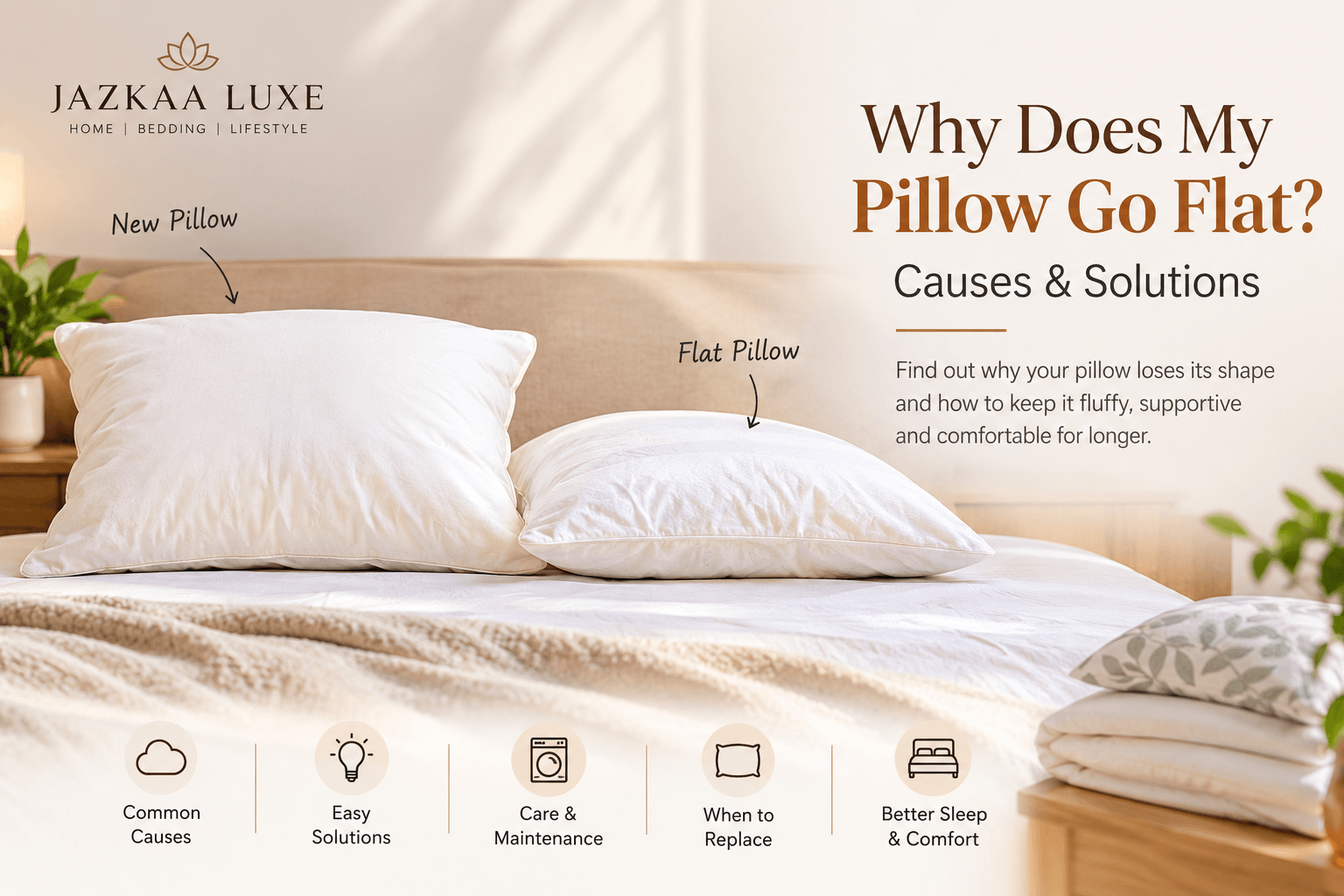
Why Does My Pillow Go Flat? Causes & Solutions Have you ever gone to bed with a comfortable, fluffy pillow only to wake up with a thin, uneven or completely flat pillow? If your pillow loses its shape, feels less supportive or develops permanent dents, you may be wondering: Why does my pillow go flat? A pillow can become flat for several reasons, including regular use, compression, moisture, incorrect washing, low-quality filling, poor maintenance and simply reaching the end of its usable life. Over time, the filling inside a pillow can lose its loft, making it feel thinner and less comfortable. A flat pillow is not just a cosmetic problem. If your pillow no longer provides adequate support, it may affect your sleeping comfort and contribute to morning neck or shoulder discomfort. In this detailed guide, we will explain why pillows go flat, how to prevent a pillow from flattening, how to make a flat pillow fluffy again, when to replace your pillow and how to choose a long-lasting pillow for everyday use. Why Does My Pillow Go Flat? The most common reason a pillow goes flat is repeated compression from everyday use. Every night, your head and body weight compress the pillow filling. With thousands of hours of repeated pressure, some types of filling gradually lose their original loft and ability to spring back. However, regular use is not the only reason. Common causes of a flat pillow include: Continuous nightly use Low-quality or insufficient filling Natural compression of pillow fibres Incorrect washing and drying Excess moisture and humidity Sleeping in the same position every night Poor pillow maintenance Age and normal wear and tear Heavy pressure or sitting on the pillow Choosing the wrong pillow type for your sleeping position Understanding the cause can help you decide whether the pillow can be restored or whether it is time to replace it. 1. Regular Use Can Flatten Your Pillow One of the biggest reasons pillows become flat is simply daily use. Your pillow supports your head for several hours every night. This repeated pressure compresses the filling and gradually reduces the pillow’s loft. A brand-new pillow may initially feel: Fluffy Full Supportive Soft Well-shaped After months or years of use, the same pillow may become: Thin Lumpy Uneven Compressed Less supportive This is normal to some extent. Even a good-quality pillow will eventually show signs of wear because bedding products are exposed to continuous pressure, body heat, moisture and movement. How to reduce compression You can help your pillow maintain its shape by: Fluffing it regularly Rotating it from time to time Avoiding sitting on it Keeping it dry Using a breathable pillow cover Following the manufacturer’s washing instructions 2. Low-Quality Pillow Filling Can Lose Loft Quickly Another important reason for a flat pillow is the quality and construction of the filling. Not all pillows are made with the same materials or the same amount of filling. A pillow with poor-quality or insufficient filling may flatten much faster than a well-constructed pillow. Common pillow fillings include: Polyester fibre Microfibre Memory foam Latex Feather and down Cotton Hollow fibre Other synthetic blends Each filling behaves differently. For example, some fibre-filled pillows may compress over time, while foam-based pillows generally behave differently because their structure provides support rather than relying entirely on loose fibres. When shopping for a pillow, don’t look only at how fluffy it feels when new. Consider the filling quality, construction, support level, size, firmness and intended use. 3. Washing Your Pillow Incorrectly Can Make It Flat Incorrect washing is one of the most overlooked causes of a flat or misshapen pillow. Some pillows can be machine washed, while others should only be spot cleaned or professionally cleaned. Washing a pillow incorrectly can damage the filling or cause it to clump together. For example, excessive water, aggressive washing, high heat or insufficient drying may affect the pillow’s structure. Before washing your pillow: Check the care label. Confirm whether the pillow is machine washable. Use the recommended washing cycle. Avoid harsh chemicals unless the manufacturer specifically recommends them. Follow the correct drying instructions. Make sure the pillow is completely dry before using it again. Never assume that because a pillow cover is machine washable, the pillow itself can also be washed in the same way. 4. Moisture and Humidity Can Affect Pillow Loft Your pillow absorbs moisture from your surroundings and from normal overnight use. Sweat, humidity and moisture can accumulate inside bedding over time, particularly in warm climates. Persistent moisture can make some types of filling feel compressed, heavy or less fluffy. This is particularly important for bedrooms in warm or humid environments. To keep your pillow fresher: Air it regularly. Keep your bedroom well ventilated. Use breathable pillow covers. Avoid storing pillows in damp areas. Make sure washed pillows are completely dry. Wash pillow covers regularly. For everyday bedding, breathable cotton textiles can be a practical choice. Jazkaa Luxe offers cotton bedding options designed around softness and breathability, including its Jazkaa 4146 King Size Cotton Bedsheet, which comes with matching pillow covers. 5. Your Pillow May Be Too Old Sometimes there is nothing wrong with your pillow—it has simply reached the end of its useful life. Pillows experience considerable wear because they are used for several hours almost every night. Over time, you may notice: Permanent dents Flattening Lumps Uneven filling Loss of support Discolouration Persistent odour Difficulty getting comfortable If fluffing and proper care no longer restore the pillow’s original shape, replacing it may be more practical than trying to repair it. The exact lifespan varies depending on the pillow material, quality, construction, care routine and frequency of use. 6. Sleeping in the Same Position Can Create Uneven Flattening Do you always sleep on exactly the same area of your pillow? If yes, repeated pressure in one spot can cause uneven compression. For example, if you sleep on your side and your head always rests in the same area, that section of the pillow may

Best Pillow Covers for Everyday Use: How to Choose the Right Pillowcase for Comfort, Hygiene & Style
Home Decor

Best Pillow Covers for Everyday Use: How to Choose the Right Pillowcase for Comfort, Hygiene & Style

Best Pillow Covers for Everyday Use: How to Choose the Right Pillowcase for Comfort, Hygiene & Style A good night’s sleep is not only about choosing the right mattress or pillow. The pillow cover that comes in direct contact with your face and hair every night also plays an important role in your overall sleeping experience. Whether you are looking for soft pillow covers for everyday use, breathable cotton pillow covers for summer, stylish pillowcases for your bedroom, or easy-to-wash bedding for daily use, choosing the right material and design can make a noticeable difference. At Jazkaa Luxe, we believe that everyday bedding should combine comfort, quality, durability and style. In this guide, we will explore how to choose the best pillow covers for everyday use, which fabrics are suitable for different requirements, how frequently pillow covers should be washed, and what features you should look for before buying. Why Choosing the Right Pillow Cover Matters Your pillow cover is one of the bedding products that stays in close contact with your face and hair for several hours every night. Because of this, its fabric, texture, breathability and cleanliness can influence your comfort. A good pillow cover should ideally be: Soft and comfortable against the skin Breathable enough for everyday sleeping Easy to wash and maintain Durable enough to withstand regular washing Properly sized for your pillow Suitable for the weather and your sleeping preferences Attractive enough to complement your bedroom décor The right pillowcase can also help your bed look more organised and coordinated. For example, if you want to refresh your entire bedroom rather than changing pillow covers individually, a coordinated bedding set can be an excellent option. The Jazkaa 4146 King Size Cotton Bedsheet Set includes a large cotton bedsheet along with two matching pillow covers, making it suitable for creating a coordinated everyday bedroom look. What Are the Best Pillow Covers for Everyday Use? For most households, cotton pillow covers are an excellent choice for everyday use because cotton is comfortable, breathable and relatively easy to maintain. Cotton pillowcases are particularly useful for people who want bedding that can be washed regularly without requiring complicated care. The best everyday pillow cover ultimately depends on your individual needs. Best Pillow Covers Based on Your Requirement Requirement Suitable Pillow Cover Everyday use Cotton pillow covers Hot weather Breathable cotton pillow covers Easy maintenance Machine-washable cotton covers Soft sleeping surface Soft cotton or sateen-style fabrics Luxury bedroom look Premium decorative pillow covers Hair-conscious sleepers Smooth satin or silk-style pillowcases Bedroom styling Printed or designer pillow covers Long-term regular use Durable cotton pillow covers There is no single pillowcase material that is perfect for everyone. Material, weave, climate, personal preference and maintenance requirements all matter. 1. Cotton Pillow Covers – A Reliable Choice for Daily Use If you are looking for the best pillow covers for everyday use, cotton is one of the most practical options to consider. Cotton is widely used for bedding because it offers a comfortable combination of softness, breathability and durability. Benefits of Cotton Pillow Covers Breathable: Cotton allows air to circulate through the fabric, making it particularly comfortable during warmer weather. Comfortable: A good-quality cotton pillow cover feels soft and pleasant against the skin. Easy to maintain: Cotton pillow covers are generally easier to wash and care for than delicate luxury fabrics. Suitable for regular washing: Since pillow covers come into frequent contact with skin, hair, sweat and natural oils, being able to wash them regularly is important. Versatile: Cotton pillowcases can work with traditional, contemporary and minimalist bedroom décor. For Indian households, where warm and humid weather can be a concern, breathable cotton bedding can be especially practical. 2. Soft Pillow Covers for a Comfortable Sleeping Experience If comfort is your top priority, look for a pillow cover with a soft, smooth and skin-friendly texture. A pillow cover that feels rough or uncomfortable can make your sleeping experience less pleasant, particularly for people who move frequently during the night. When shopping for soft pillow covers, consider: Fabric quality Weave Stitching quality Fabric thickness Overall finish Washing and care requirements It is also important not to confuse softness with poor-quality fabric. A high-quality pillow cover should provide softness while maintaining its structure and durability after repeated washing. 3. Breathable Pillow Covers for Summer During summer, your pillow cover can influence how comfortable you feel while sleeping. For hot sleepers, breathable cotton pillow covers are generally a practical choice. Cotton bedding is known for its airflow and moisture-absorbing properties, making it a popular choice for warm climates. If your bedroom tends to become warm at night, consider: Cotton pillow covers Lightweight fabrics Breathable weaves Light-coloured bedding Easy-to-wash materials You can also pair breathable pillow covers with lightweight cotton bedsheets to create a more comfortable summer bedding setup. 4. Satin Pillow Covers for Hair & Skin Satin pillowcases have become increasingly popular among people interested in hair and skincare. Unlike cotton, satin has a smooth surface that can reduce friction between the pillowcase and hair or skin. This is one reason satin pillowcases are often associated with reducing hair tangling, frizz and friction. However, it is important to understand that satin describes a type of weave rather than a single fibre. Satin can be produced using different materials, including polyester, rayon, nylon and silk. Satin may therefore be worth considering if your priorities include: A smoother sleeping surface Reduced friction against hair A luxurious bedroom appearance A softer-feeling pillowcase However, satin may require more careful maintenance than everyday cotton, depending on the material. 5. Cotton vs Satin Pillow Covers: Which Is Better? One of the most common questions shoppers ask is whether they should choose cotton or satin pillow covers. The answer depends on what you value most. Cotton Pillow Covers Best for: Everyday use, hot weather, easy maintenance and breathable comfort. Cotton is generally practical for households that wash their pillow covers frequently and want a fabric that works throughout the year. Satin Pillow Covers

0

Your Cart Is Empty

✖

No products in the cart.

Scroll to Top